Why Are Turf Rakes Essential for Groundskeeping?
Healthy turf rarely depends on one dramatic intervention. It depends on repeated, accurate maintenance across changing conditions. Turf Rakes help grounds crews remove thatch, loosen surface debris, and redistribute fine material without relying immediately on heavy machinery. The difference appears underfoot: fewer matted areas, cleaner mowing lines, and more consistent ball or player response.
Professional reports support this practical connection. The United States Golf Association’s Golf Course Environmental Profile examines water use, nutrient management, and maintenance practices across golf facilities. Its findings show that resource efficiency depends on routine decisions, not equipment alone. The Environmental Protection Agency’s WaterSense program reports that outdoor water use can represent about 30 percent of household consumption nationally, with higher shares in dry climates. Better surface preparation can support more targeted irrigation, although a rake cannot solve poor drainage or compacted soil. Small tools matter.
From direct groundskeeping experience, rake selection affects both labor and turf stress. A lightweight model suits daily leaf removal, while a stronger spring-tine design can manage thatch or light grooming. Handle length, tine spacing, and soil moisture all change the result. The Sports Turf Managers Association repeatedly emphasizes site-specific maintenance planning in its educational resources, and that principle should guide rake use. One method will not fit every field. That is an inconvenient truth.
This article explains why Turf Rakes remain essential for professional groundskeeping. It considers their role in surface quality, labor control, turf health, and responsible resource use. Evidence matters, but observation matters too. Crews should test small areas, record results, and adjust their routines rather than trust a universal formula.
What Is a Turf Rake?
Why Are Turf Rakes Essential for Groundskeeping?
What Is a Turf Rake?
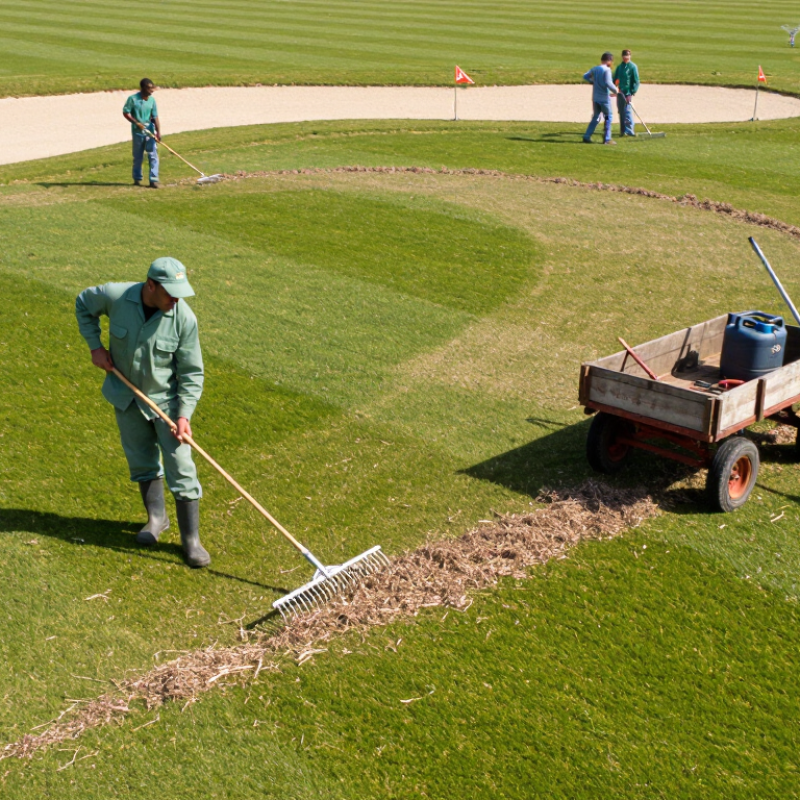
A turf rake is a specialized tool for lifting thatch, loose debris, and matted grass from a turf surface. Its spring-like teeth reach between plants without cutting deeply into the soil. Unlike a stiff garden rake, it is designed for controlled contact with living turf.
During field maintenance, a turf rake can remove dead runners, leaves, and surface buildup after mowing. It also helps grass stand upright before overseeding or light topdressing. The result is better seed-to-soil contact and a more even playing surface. Still, it is not a cure-all. Aggressive raking can tear crowns, expose roots, and create thin patches. Soil type, grass species, and moisture should guide the pressure.
The U.S. Environmental Protection Agency’s WaterSense program reports that outdoor use represents nearly 30% of household water consumption. A rake cannot solve irrigation waste, but it can improve surface openness and reduce runoff when used correctly. Professional turf managers often pair hand raking with core aeration, mowing records, and moisture checks. That combination is more reliable than guessing.
Tips: Rake when the surface is slightly dry, not saturated. Work in short passes. Remove only loose material. Inspect the turf afterward, because a clean-looking surface may still hide compaction. A quick soil probe can reveal problems the rake cannot.
How Turf Rakes Improve Turf Health and Surface Quality
Why Are Turf Rakes Essential for Groundskeeping?
Turf rakes improve turf health by removing loose thatch, dead leaves, and compacted surface debris. These materials can block air, water, and nutrients from reaching the root zone. During routine groundskeeping, a light rake also lifts flattened grass blades after rain, mowing, or heavy foot traffic. I have found that this simple action often reveals weak drainage spots before they become bare patches.
Surface quality improves when raking distributes loose soil, sand, or organic material evenly. It can reduce small ridges and restore a smoother ball-roll or playing surface. However, aggressive raking may tear crowns and expose soil. That mistake is easy to make. The GCSAA’s 2021 Water Use and Conservation Practices report recorded a 29% reduction in water use on U.S. golf courses since 2005. Efficient surface management supports that goal, but a rake cannot replace irrigation audits or soil testing. The USGA Green Section also emphasizes regular observation of compaction, drainage, and turf density when managing playable surfaces.
Tips: Rake when foliage is dry and flexible. Use shallow strokes on healthy turf. Match tine stiffness to grass type. Inspect the surface afterward. If debris keeps returning, check mowing height, drainage, and traffic patterns. Photograph problem areas weekly. Small changes become easier to measure.
Essential Groundskeeping Tasks Performed by Turf Rakes
Turf rakes perform several essential groundskeeping tasks beyond simple surface cleaning. Their flexible tines remove leaves, grass clippings, moss, and loose thatch without aggressively disturbing healthy turf. On sports fields, they lift flattened grass after heavy foot traffic. This improves light exposure and helps the surface recover more evenly.
They also redistribute infill, soil, or loose organic material across uneven areas. A steady raking pattern can reduce shallow depressions and reveal compacted zones. Groundskeepers should adjust pressure according to turf condition. Wet soil may smear, while dry thatch can break into stubborn layers.
I have found that a perfect-looking surface can still hide compacted roots beneath it. That requires closer inspection, not faster raking.
Tips:
Rake in different directions, especially around goal areas and walkways. Clean the tines regularly to prevent spreading weeds or fungal debris. Work during suitable moisture conditions, then inspect the surface at eye level. Avoid pulling too hard near exposed roots or repaired patches. Small mistakes matter. A rushed pass may remove useful organic cover or create thin spots. Recording the date, weather, and treated areas also improves future maintenance decisions.
Types of Turf Rakes and Their Suitable Applications
Why Are Turf Rakes Essential for Groundskeeping?
Groundskeeping depends on more than regular mowing. Turf rakes remove thatch, spread loose soil, and lift flattened grass. They also reveal drainage problems and compacted areas before damage becomes severe. A clean surface helps water, air, and nutrients reach the root zone. In practice, small rake choices can change the final turf quality.
Spring-tine rakes suit lawns, sports fields, and fine grass areas. Their flexible metal teeth collect leaves without aggressively disturbing healthy roots. Scarifying rakes have sharper blades. Use them to remove dense thatch during active growth, but avoid dry or stressed turf.
Landscape rakes, with wider rigid teeth, level topdressing and break small soil clumps. They work well after aeration. Hand rakes offer control around paths, edges, and delicate planting beds. Powered rakes cover larger fields, yet they require careful depth adjustment. Too deep is a common mistake.
Tips: Check soil moisture first. Slightly moist soil is easier to work. Match tine strength to grass type and season. Rake in short passes, then inspect the surface. I sometimes remove less material than expected, and that is useful feedback. Overworking turf can create bare patches, even when the area initially looks untidy. Clean the rake after use, especially when moving between managed sections. This reduces soil transfer and keeps future work more predictable.
Best Practices for Safe and Effective Turf Raking
Safe turf raking begins with reading the surface, not attacking it. Walk the area and identify stones, irrigation heads, bare patches, and hidden roots. Wet soil compacts easily, so delay work until the surface feels firm underfoot. Wear closed-toe boots, gloves, eye protection, and hearing protection around powered rakes. Keep bystanders away. Inspect the rake before use. A loose tine can damage turf or cause injury. Small details matter.
Set the rake depth conservatively, especially on established grass. Remove thatch gradually with light passes instead of scraping aggressively. Work when the grass is actively growing and recovery is likely. Rake in alternating directions to lift debris evenly without creating grooves. Never force the tool through resistant areas. Stop if roots or crowns become visible. I have seen crews over-rake a lawn because the surface looked untidy. It looked clean. Recovery took weeks.
Collect loosened thatch, stones, and dead leaves immediately. Leaving debris behind can block light and encourage damp conditions. After raking, inspect exposed crowns and uneven soil. Water lightly only when the turf shows genuine stress. Record the date, weather, rake depth, and grass response. This record supports better decisions during the next maintenance cycle. Still, no setting works everywhere. Turf type, soil structure, and season can change the result. Recheck the area within 48 hours. A cautious adjustment often protects more grass than extra effort.
