China Top 10 Carbide Stator Manufacturers for Global Buyers
Choosing a reliable carbide stator manufacturer in China requires more than comparing prices or polished catalogs. Global buyers must examine material grades, dimensional accuracy, coating options, production capacity, and quality-control records. A carbide stator may look simple, yet small variations can affect wear resistance, alignment, sealing, and service life.
This guide introduces ten Chinese manufacturers that serve industrial buyers and international supply chains. It considers their manufacturing experience, engineering support, inspection methods, export readiness, and ability to produce custom components. Practical details matter. Can the supplier provide material certificates? Are tolerances measured with calibrated equipment? How are sample approvals documented? These questions often reveal more than a sales presentation.
A strong manufacturer should communicate clearly from drawing review to final inspection. Buyers should also check references, audit production sites where possible, and confirm whether stated certifications apply to the relevant facility. No list is perfect. Supplier capabilities can change, and public information may remain incomplete. That is why this overview should support due diligence, not replace it. Careful comparison can help purchasers reduce technical risks, control delivery expectations, and select a carbide stator partner suited to demanding applications. The best choice is not always the largest company. Sometimes, a responsive engineering team and consistent inspection records matter more. Verify every claim.
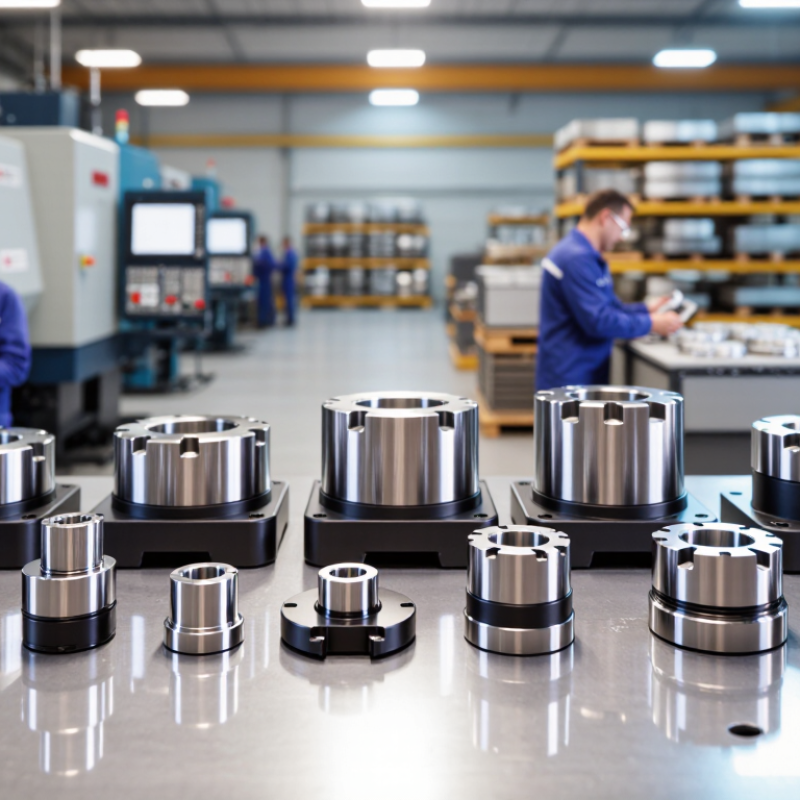
China’s Carbide Stator Industry: 1,500–2,000 HV Hardness Benchmark
China’s carbide stator industry increasingly targets a 1,500–2,000 HV hardness benchmark. This range can support strong wear resistance in abrasive working conditions. However, hardness alone does not prove reliable stator performance.
During supplier evaluations, global buyers should request the test method, load, location, and sampling plan. A polished cross-section should show consistent carbide distribution, not isolated hard spots. Testing near the surface and core can reveal uneven sintering or material variation. Small details matter.
A stator with 1,800 HV may still fail if its geometry is inaccurate. Poor dimensional control can create uneven contact, heat, and rapid wear. Buyers should compare surface roughness, concentricity, carbide grain size, and bonding quality. Batch records also deserve attention. They can expose repeated process drift.
The top ten manufacturers should be judged through samples, inspection reports, and controlled trial data. Ask for hardness maps rather than one attractive number. Ask for failure analysis, too. Some suppliers may provide excellent laboratory results but weaker production consistency. That gap is easy to miss.
I would also treat the 1,500–2,000 HV range as a reference, not a universal rule. Different fluids, temperatures, loads, and mating materials change the ideal specification. A harder surface is not always better. Excessive hardness can reduce toughness and increase edge chipping. Practical testing should challenge every confident claim.
How Carbide Stators Work: Wear Resistance, Tolerance, and Service-Life Data
A carbide stator resists wear through hard tungsten-carbide particles bonded in a metallic matrix. During operation, the stator supports sliding contact, pressure fluctuation, and abrasive particles. The harder surface reduces cutting and grooving. It does not eliminate them.
Published cemented-carbide data commonly places hardness near 1,200–2,000 HV30, depending on binder content and grain size. The 2024 U.S. Geological Survey Mineral Commodity Summaries reported about 84,000 metric tons of global tungsten mine production in 2023. This supply supports carbide manufacturing, but it does not guarantee component quality. Processing remains decisive. Poor brazing, pores, or uneven grinding can shorten service life quickly.
Tolerance matters as much as hardness. In precision stator assemblies, a radial clearance change of only 0.02–0.05 millimeters can affect leakage, heat, and vibration. ASTM G65 measures abrasive wear through volume loss, reported in cubic millimeters. However, laboratory loss cannot predict every field result. Actual life depends on speed, pressure, fluid cleanliness, alignment, and thermal cycling. A well-tested carbide stator may operate for thousands of hours, yet that figure needs application-specific evidence. This is where many supplier claims become too confident. Field logs, dimensional inspections, and repeat testing deserve more trust than a single headline number.
Selection Criteria: Carbide Grade, ±0.01 mm Tolerance, and ISO 9001
China Top 10 Carbide Stator Manufacturers for Global Buyers
Selecting a carbide stator supplier requires more than comparing quotations. Carbide grade controls wear resistance, toughness, and machining stability. For example, tungsten carbide with higher cobalt content can resist impact better, but it may wear faster in abrasive service. USGS Mineral Commodity Summaries 2024 reported approximately 81,000 metric tons of global tungsten mine production in 2023. That supply pressure makes grade selection and material traceability increasingly important.
Ask for the exact carbide composition, grain size, density, hardness, and transverse rupture strength. Do not accept “premium carbide” as a technical specification. A reliable manufacturer should document ±0.01 mm dimensional tolerance through inspection records, calibrated gauges, and defined measurement methods. Request a sample inspection report for bore diameter, flatness, and concentricity. Small errors can create vibration, leakage, or uneven stator wear. Precision matters.
ISO 9001 certification adds process discipline, but it is not a guarantee of perfect parts. The ISO Survey 2022 recorded 1,265,216 ISO 9001 certificates worldwide, showing broad adoption of quality systems. Still, certificates can become paperwork without strong production controls. I would check certificate validity, corrective-action records, batch identification, and final inspection practice. This step is often skipped. It should not be. Supplier reviews should also examine packaging, export documentation, and technical response speed. A technically strong factory may still disappoint when communication is vague.
China’s Top 10 Carbide Stator Manufacturers Ranked by Global Buyer Metrics
China Top 10 Carbide Stator Manufacturers for Global Buyers
China’s top ten carbide stator manufacturers should be ranked by measurable buyer performance, not factory size alone. A practical scorecard can assess material consistency, dimensional control, export experience, delivery reliability, testing records, and technical response time. The USGS Mineral Commodity Summaries 2024 reported about 84,000 metric tons of global tungsten mine production in 2023, with China supplying roughly 67,000 tons. This supply depth supports carbide production, but it does not guarantee stable quality.
Global buyers should also examine ISO 9001 certification, batch traceability, hardness reports, and tolerance data. The World Bank’s Logistics Performance Index 2023 placed China 19th globally, showing strong logistics capability, although shipment performance can differ between regions. A useful ranking gives higher scores to suppliers with documented inspection systems and lower complaint rates. It should also separate verified evidence from sales claims. That part is often overlooked.
Tips: Request three recent inspection reports, not one sample. Check tungsten carbide grade, cobalt content, surface finish, and runout against your drawing. Ask for delivery records covering at least six months. A perfect ranking is impossible because public manufacturer data remains incomplete. Buyer audits may change the order. That is acceptable. Reliable decisions sometimes need revision.
Applications and Compliance: ISO 14001, RoHS, REACH, and Export Capability
China Top 10 Carbide Stator Manufacturers for Global Buyers
Carbide stators support abrasive slurry pumps, high-speed motors, and wear-resistant equipment. Their value depends on more than hardness. Buyers should examine dimensional control, cobalt content, porosity, and surface finishing. ISO 14001 certification signals structured environmental management. The ISO Survey 2022 recorded more than 500,000 ISO 14001 certificates worldwide. Still, a certificate alone cannot prove responsible carbide production. Audit dates, certificate scope, and factory location require careful checking.
RoHS and REACH compliance matter when stators enter electrical equipment or European supply chains. ECHA reports more than 25,000 substances registered under REACH, showing the scale of chemical control. Ask manufacturers for current material declarations, restricted-substance test reports, and batch traceability. Export capability also includes accurate commercial invoices, packing lists, origin documents, and stable inspection procedures. In practice, small errors in product codes can delay customs clearance. That part is often underestimated.
Tips: Request one sample, one inspection report, and one environmental record. Compare them against the same drawing. Check whether ISO 14001 covers manufacturing, not only an office address. Ask how rejected carbide is collected and documented. Also review RoHS and REACH statements for product-specific evidence. A polished document may still hide weak process control. That is an uncomfortable but useful reality for global buyers.
