top of page

10 Heat Recovery Ventilator Buying Tips for Global Buyers

Choosing a Heat Recovery Ventilator for an international project is not a simple catalog decision. Climate, building use, energy prices, maintenance skills, and local installation habits all influence performance. A unit that works quietly in a mild coastal apartment may struggle during a dry winter in a northern warehouse.

Dr. Pawel Wargocki, a respected indoor-air-quality researcher, offers a useful reminder: “Ventilation must serve people, not merely equipment.” That principle should guide every comparison. Buyers need to examine airflow at real resistance, heat-recovery efficiency, sound levels, frost protection, filter access, controls, and power consumption. Marketing values can look impressive. The duct layout may tell a different story.

Small details matter. Check whether filters are available near the project site. Confirm the voltage, frequency, communication protocol, and replacement cost before signing a purchase order. Ask for tested data, not only attractive percentages. A compact unit with a washable pre-filter may suit a dusty construction region, while a colder climate may require reliable preheating and defrost control.

Experience also exposes uncomfortable gaps. Some buyers focus heavily on initial price and underestimate commissioning. Others choose advanced controls that local technicians cannot support. That is a mistake. Sometimes, simpler is better.

This guide presents ten practical Heat Recovery Ventilator buying tips for global buyers. It connects technical specifications with real operating conditions, supplier reliability, and long-term ownership. No checklist can remove every risk. Still, careful questions can prevent expensive surprises, stale indoor air, and equipment sitting unused in a mechanical room.
10 Heat Recovery Ventilator Buying Tips for Global Buyers

Understanding How Heat Recovery Ventilators Work

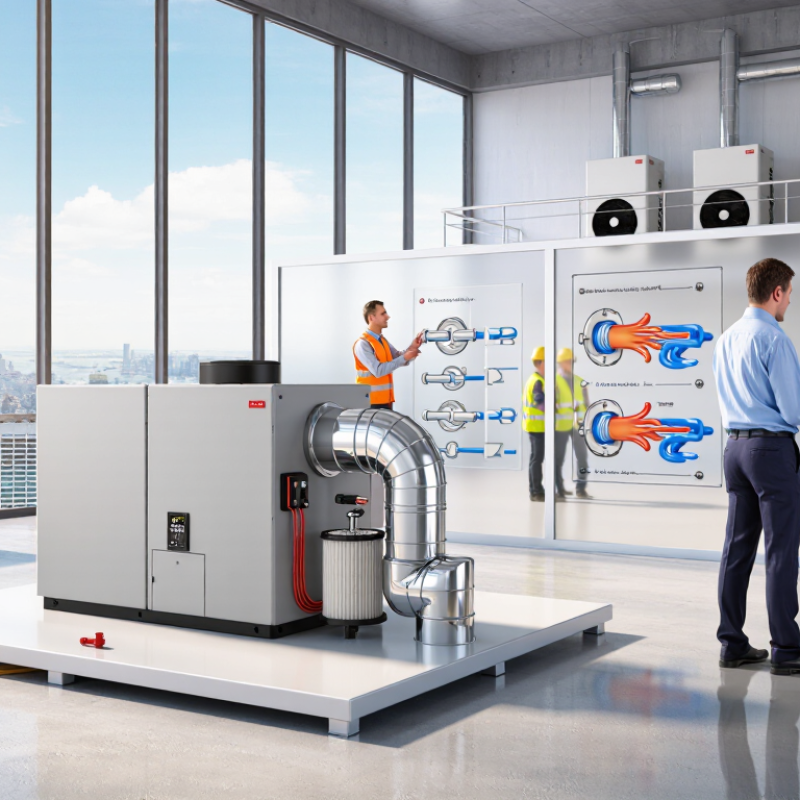
Understanding how a heat recovery ventilator works helps global buyers judge real performance, not just brochure claims. The unit uses two separate air streams. Stale indoor air exits through a heat exchanger, while fresh outdoor air enters through another channel. Heat transfers across the core, but the air streams should not mix. In winter, outgoing warmth preheats incoming air. In summer, cooler indoor air can reduce the heat entering from outside.

The U.S. Department of Energy states that many heat recovery ventilators can recover about 70–80% of the energy in exhausted air. Actual results depend on airflow balance, climate, duct design, and maintenance. I have seen systems lose comfort when filters become visibly gray. Check the rated airflow at a stated pressure, not only the recovery percentage. Noise data also matters, especially near bedrooms.

Cold-climate buyers should examine frost protection and defrost controls. Humid-climate buyers need condensate drainage and corrosion-resistant components. ASHRAE ventilation guidance emphasizes adequate outdoor airflow, but more airflow is not automatically better. It can increase heating or cooling loads. A sensible heat exchanger mainly transfers temperature; an enthalpy core also transfers some moisture. That difference matters in coastal or tropical regions. No unit is perfect. Procurement teams should request independent test conditions, service intervals, filter availability, and commissioning records before comparing prices.

Assessing Ventilation Needs and Indoor Air Quality Goals

Assessing Ventilation Needs and Indoor Air Quality Goals

A suitable heat recovery ventilator begins with measurement, not catalogue capacity. Record floor area, ceiling height, occupancy, and air leakage. Count moisture sources, including showers, cooking, drying clothes, and indoor plants. Local climate also matters. Cold regions need frost protection, while humid climates require careful condensation control.

The U.S. Environmental Protection Agency reports that indoor pollutant levels can be two to five times higher than outdoors, and occasionally much higher. This supports testing for particulate matter, carbon monoxide, humidity, and carbon dioxide before choosing equipment. The World Health Organization’s 2021 air quality guidelines recommend annual PM2.5 exposure below 5 micrograms per cubic metre. That target is demanding. Outdoor pollution may make it difficult without stronger filtration and better envelope sealing.

Measure first. Then size the ventilation rate against applicable local requirements, such as ASHRAE 62.2 for residential buildings. Carbon dioxide can reveal occupancy-related ventilation problems, but it does not detect every pollutant. A room may show acceptable CO2 while cooking particles remain high. I would not treat one sensor as the whole truth. Place sensors in bedrooms, living areas, and near moisture sources when practical. Check noise, filter access, winter performance, and controls during site visits. Energy savings also depend on actual use; a highly efficient unit cannot recover heat from air that occupants never exchange. Some assumptions will be wrong. Recheck them after installation.

10 Heat Recovery Ventilator Buying Tips for Global Buyers

Assessing ventilation needs and indoor air quality goals

How to use this chart: Typical outdoor-air requirements vary by occupancy. The values shown are calculated from commonly used ASHRAE 62.1 ventilation-rate components, assuming 10 m² of floor area per person. Higher-demand spaces generally require greater HRV airflow capacity, while buyers should also evaluate filtration, humidity control, noise, heat-recovery efficiency, climate, local codes, and commissioning requirements.

Reference basis: ASHRAE Standard 62.1 outdoor-air rate components; values are planning benchmarks, not a substitute for a project-specific ventilation calculation.

Comparing Energy Efficiency, Heat Recovery, and Airflow Ratings

10 Heat Recovery Ventilator Buying Tips for Global Buyers

For global buyers, three numbers deserve separate attention: energy efficiency, heat recovery, and airflow. Combining them can hide costly compromises. The International Energy Agency’s 2023 Global Status Report says buildings consume about 30% of global final energy. Ventilation losses therefore deserve serious attention. Natural Resources Canada reports that many heat recovery ventilators can recover up to 80% of heat from exhaust air. However, an 80% recovery rating does not guarantee low electricity use.

Check whether the published efficiency is sensible, latent, or total recovery. Sensible recovery mainly transfers temperature, while total recovery may include moisture. Test conditions matter. Compare units using the same temperature, humidity, fan speed, and frost-control method. A practical mistake is trusting the highest percentage without checking the test standard. AHRI Standard 1060 and EN 13141-7 provide useful frameworks for comparing recovery performance.

Airflow ratings need equal caution. Compare supply and exhaust airflow at the same external static pressure, not at free-air conditions. Ask for performance curves, fan power, sound levels, and filter pressure drops. Local ventilation codes, including requirements aligned with ASHRAE 62.2, should guide the required airflow. A smaller unit may save purchase cost but struggle in a crowded home. A larger unit may waste electricity when operated far below its design point. Pressure matters. So does maintenance. Even strong laboratory efficiency can decline when filters become dusty, seals weaken, or frost protection runs too often.

Checking Climate Compatibility, Installation, and Maintenance Needs

A heat recovery ventilator should match the climate, not just the room size. In cold regions, check its frost protection method and defrost performance. In humid areas, examine condensate drainage and moisture control. Coastal buyers should inspect corrosion-resistant cabinet materials. A unit designed for mild weather may struggle during freezing nights or monsoon humidity.

Start there.

Installation conditions often decide real performance. Confirm the required wall space, duct diameter, electrical supply, and outdoor intake position before purchasing. Keep intake and exhaust openings away from vehicle fumes, chimneys, and stagnant corners. Service panels need clear access; a cramped ceiling can turn a simple filter change into an expensive task. I have seen ventilation projects underperform because installers ignored duct bends and poor sealing. The product was suitable, but the installation was not.

Maintenance needs should be written into the buying decision. Ask how often filters need cleaning in dusty or polluted locations. Check whether replacement filters are available locally and whether condensate lines can be inspected easily. Fans, sensors, and heat exchange cores also need periodic checks. A washable filter may reduce recurring costs, but cleaning it incorrectly can damage the material. Do not assume the maintenance guide fits every climate. Seasonal inspection schedules may need adjustment after the first year. Small details matter.

Evaluating Suppliers, Certifications, Costs, and After-Sales Support

10 Heat Recovery Ventilator Buying Tips for Global Buyers

Supplier evaluation should begin with operating evidence, not polished catalog photos. Ask for airflow curves, heat recovery efficiency, noise readings, and performance data at your required pressure. A factory audit can reveal assembly quality, testing equipment, and production consistency. Request recent project references in climates similar to yours. One sample unit matters. It may expose loose wiring, weak seals, or confusing controls.

Certifications require careful checking. Confirm electrical safety, electromagnetic compatibility, and energy performance requirements for the destination market. Do not treat ISO 9001 as proof of product compliance. Ask for valid certificates, test reports, and the exact model numbers covered. Requirements can differ between residential, commercial, and industrial installations. This step is easy to rush. That can become expensive.

Compare total cost, not only the purchase price. Include freight, customs duties, installation, controls, replacement filters, fan electricity, and technician training. A cheaper unit may consume more power or need imported filters. After-sales support should include clear warranty terms, spare-parts availability, remote troubleshooting, and defined response times. Ask who handles commissioning and what happens when a control board fails after two years. In practice, supplier promises can sound excellent before the order. Get them written into the contract. I would also leave room for doubt, because projected savings often assume ideal airflow and perfect maintenance.

10 Heat Recovery Ventilator Buying Tips for Global Buyers - Evaluating Suppliers, Certifications, Costs, and After-Sales Support

No. Buying Dimension What to Evaluate Practical Reference Data Documents or Evidence to Request Buyer Action
1 Airflow Capacity Match the supply and extract airflow to the building size, occupancy, room use, duct resistance, and local ventilation rules. Check both nominal and external-static-pressure airflow. Common residential units are often specified from approximately 100 to 500 m³/h. Actual airflow may be substantially lower at higher external static pressure. Fan curve, airflow table at stated pressure points, operating range, commissioning procedure, and recommended duct size. Select a unit using the design airflow at the project’s calculated pressure, not the free-air maximum.
2 Heat-Recovery Performance Compare sensible temperature efficiency, latent recovery where applicable, airflow balance, test conditions, and frost-control impact. Residential HRVs commonly report sensible recovery efficiencies around 60%–90%, but results vary with airflow, temperature difference, humidity, and test method. Independent performance report, test standard, test airflow, indoor/outdoor temperatures, humidity conditions, and defrost assumptions. Compare products only when the test conditions and definitions are equivalent.
3 Climate and Frost Protection Assess operation in cold, hot, humid, coastal, dusty, or high-altitude environments. Review preheating, bypass, condensate drainage, and automatic defrost logic. Cold-climate units may require frost protection below approximately 0°C, depending on indoor humidity, airflow, and exchanger design. Minimum operating temperature, defrost sequence, heater power, condensate requirements, insulation details, and climate test data. Choose controls that prevent frost without unnecessarily stopping balanced ventilation.
4 Noise and Vibration Review sound power or sound pressure data, fan speed, casing insulation, vibration isolation, and noise transmitted through ducts. Noise performance is highly installation-dependent. A low published dB(A) value is meaningful only when the distance, room absorption, airflow, and test method are stated. Acoustic test report, sound-power data by octave band where available, mounting instructions, and recommended flexible connectors. Specify a maximum noise level for bedrooms and occupied zones, then verify it during commissioning.
5 Energy Consumption Check fan input power, specific fan power, standby consumption, heater energy for frost control, and control efficiency. Annual energy use depends on airflow schedule, pressure, climate, fan efficiency, and defrost operation; it cannot be estimated reliably from recovery efficiency alone. Power draw at several airflow points, specific fan power or comparable metric, standby watts, and annual energy assumptions. Calculate life-cycle energy cost using the destination country’s electricity and heating prices.
6 Filters and Indoor-Air Quality Confirm filter dimensions, filtration class, pressure drop, replacement interval, outdoor-air protection, and accessibility for maintenance. Filter classifications differ by region. ISO 16890 uses ePM categories, while other markets may use different rating systems; ratings should not be compared without checking the test method. Filter test classification, initial and final pressure-drop data, filter availability, part numbers, prices, and replacement instructions. Prefer standard-size, locally obtainable filters and include filter replacement in the operating budget.
7 Certifications and Compliance Verify electrical safety, electromagnetic compatibility, energy-performance testing, material requirements, and destination-market regulatory obligations. Depending on the market, relevant references may include CE or UKCA requirements, applicable electrical safety standards, AHRI or CSA performance programs, EN 13141-7, and ISO 16890 for filters. Current certificates, declarations of conformity, complete model numbers, test reports, validity dates, certification scope, and authorized laboratory details. Confirm that the certificate covers the exact model and voltage configuration being purchased.
8 Supplier Capability and Quality Evaluate production capacity, quality-control procedures, component traceability, export experience, engineering support, and ability to maintain product consistency. Useful checks include documented incoming inspection, end-of-line electrical testing, airflow or leakage testing, serial-number traceability, and corrective-action records. Factory audit responses, quality certificates, inspection plan, sample test records, production lead time, and reference project evidence without undisclosed substitutions. Use a pre-shipment inspection and define acceptance criteria before issuing the purchase order.
9 Total Cost of Ownership Include equipment, controls, freight, duties, installation, ductwork, commissioning, filters, spare parts, electricity, defrost heating, and disposal costs. A useful comparison period is commonly 5–10 years. The lowest purchase price may have a higher total cost if filters, controls, fans, or service are expensive. Itemized quotation, Incoterms, packaging dimensions, tariff classification, spare-parts price list, filter cost, warranty exclusions, and estimated maintenance schedule. Compare suppliers using the same duty-paid or landed-cost basis and the same performance target.
10 After-Sales Support and Warranty Review warranty duration, response time, spare-parts availability, remote diagnostics, installer training, software support, and procedures for warranty claims. A practical support review should cover at least the expected service life, routine filter replacement, fan and sensor replacement, and availability of technical documentation. Written warranty terms, service-level agreement, escalation contacts, troubleshooting guide, parts lead times, training materials, and return or repair process. Make after-sales obligations contractual, including response times and spare-parts support for the target market.
Buyer’s comparison rule: Compare airflow, recovery efficiency, noise, power consumption, and price only when the test method, operating point, external static pressure, voltage, climate condition, and warranty scope are clearly stated.

Concrete Products Unlimited

Mon-Fri 8AM - 5PM

Concrete products, wholesale Arizona river rock for landscaping, decorative rock, sand and gravel. Rock quarry located in Arizona and delivers throughout the USA.

©2003 by Concrete Products Unlimited

bottom of page