top of page

China Best Concrete Top Manufacturers for Global Buyers?

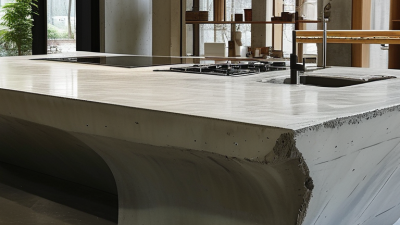
China has become a major sourcing hub for Concrete Top products, including countertops, table surfaces, vanity slabs, and custom architectural pieces. Global buyers now expect more than attractive samples. They need stable dimensions, controlled curing, clear material specifications, and dependable export support.

Karen Scrivener, a leading cement and concrete materials expert, has stated, “Concrete is the most widely used material in the world.” Her observation explains the market’s scale, but it also highlights a concern: popularity does not guarantee consistent quality. Serious manufacturers should provide mix details, aggregate information, pigment records, curing procedures, and surface-sealing data. Buyers should request physical samples before approving large orders. A small color difference can become obvious across a hotel lobby.

The strongest China Concrete Top manufacturers usually combine factory production with practical design support. They can discuss thickness tolerances, edge profiles, reinforcement, packaging, moisture protection, and installation limits. Their teams should also explain how surfaces perform under heat, stains, abrasion, and repeated cleaning. Certifications and test reports matter, but they should be traceable and relevant to the actual product.

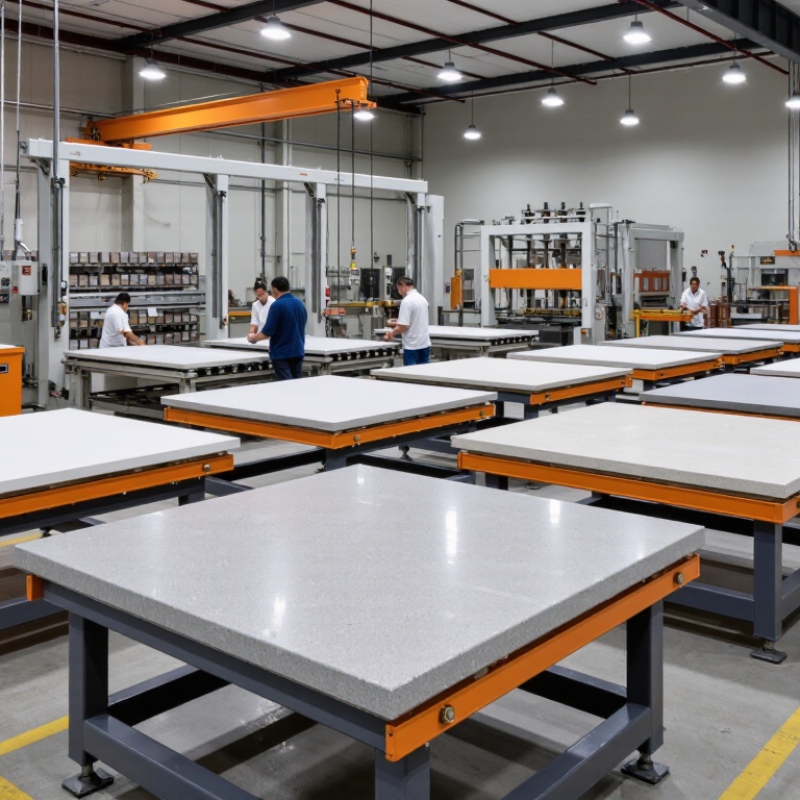
Some suppliers present impressive catalogs yet offer weak project follow-up. That gap deserves attention. A polished website is not proof of manufacturing capability. Buyers should inspect factory images, confirm production capacity, review recent project references, and communicate directly with technical staff. No supplier is perfect. Even experienced manufacturers may miss a detail when drawings change late. Careful documentation reduces that risk. This guide examines China’s leading Concrete Top manufacturers through product quality, customization, communication, lead times, and long-term reliability.

China Best Concrete Top Manufacturers for Global Buyers?

What Defines a Top Concrete Manufacturer in China?

China Best Concrete Top Manufacturers for Global Buyers?
What Defines a Top Concrete Manufacturer in China?

A top concrete manufacturer is not judged by factory size alone. Global buyers need repeatable strength, accurate batching, and clear quality records. The International Energy Agency reports that cement production creates about 7% of global carbon dioxide emissions. This makes material efficiency a purchasing issue, not a marketing detail.

Reliable suppliers test cement, aggregates, water, and admixtures before production. They should provide mix designs, compressive-strength results, calibration records, and batch traceability. A serious plant can explain how it handles a rainy shipment or a failed test. That practical answer matters. International projects may require ASTM, EN, or local standards, so technical staff must compare specifications carefully. Certificates help, but they never replace independent testing.

Export capability also defines quality. Look for protected packaging, moisture control, loading photographs, and documented inspection procedures. The Global Cement and Concrete Association’s 2050 roadmap highlights clinker reduction, alternative fuels, and carbon capture as major decarbonization routes. Therefore, buyers should request measurable data, such as recycled content, energy use, and product carbon intensity. Some suppliers report these figures inconsistently. That is a weakness worth examining. Factory visits, third-party audits, and sample testing can reveal details hidden behind polished brochures. A top manufacturer delivers consistent concrete and communicates honestly when performance needs improvement.

Key Concrete Product Categories for International Buyers

For international buyers, concrete products should be grouped by use, performance, and shipping needs. Ready-mix concrete supports foundations, floors, roads, and structural frames. Precast elements include pipes, beams, slabs, barriers, and drainage units. Dry-mix products, such as repair mortar, grout, and tile adhesive, suit smaller projects and controlled site work. Decorative concrete adds texture and color, but appearance can vary with water content and curing conditions.

A reliable supplier should explain strength grades, curing requirements, aggregate size, packaging, and test methods. Ask for batch records, laboratory reports, and samples from current production. For remote projects, check pallet protection, moisture resistance, loading plans, and delivery schedules. A technically strong product can still fail commercially when documentation is unclear. Buyers may also overlook local climate, especially freeze-thaw cycles, salt exposure, or intense heat. This mistake is easy to make.

Tips: Match the product to the project specification, not only the quoted price. Confirm standards accepted in the destination market. Request a small trial order before full procurement. Compare technical data in the same units. Keep written approval for color, dimensions, and packaging. Do not assume “weather-resistant” means suitable for every climate. That assumption can become expensive.

China Best Concrete Top Manufacturers for Global Buyers? - Key Concrete Product Categories for International Buyers

A practical sourcing reference for comparing concrete product categories, technical requirements, export documentation, and quality-control priorities.

Concrete Product Category Typical International Specifications Common Applications Relevant Standards and Test References Key Buyer Evaluation Criteria Export and Logistics Considerations Recommended Pre-Shipment Documents
Ready-Mixed Concrete Strength class: C20/25–C50/60 Slump: project-specific Maximum aggregate size: commonly 10–40 mm Commercial buildings, foundations, roads, bridges, industrial floors, and general structural works. EN 206; ASTM C94/C94M; ASTM C31/C31M; ASTM C39/C39M; local structural codes. Mix design, cement and aggregate source, water-cement ratio, workability retention, compressive strength, temperature control, and batch traceability. Usually supplied locally because fresh concrete has a limited delivery window. Cross-border supply is generally practical only for nearby projects or specialized mobile batching arrangements. Approved mix design, raw-material certificates, batch tickets, slump records, cube or cylinder test reports, and quality-management records.
Precast Concrete Components Panels Beams Columns Stairs Drainage units Custom reinforced sections Warehouses, residential developments, infrastructure, utility projects, modular construction, and transportation facilities. EN precast product standards; EN 206; EN 13369; ASTM C94 where applicable; project-specific structural standards. Dimensional tolerances, reinforcement details, lifting points, curing method, surface finish, embedded items, fire performance, and load capacity. Requires detailed shop drawings, lifting plans, protective packaging, suitable trailers or containers, and control of transport-induced cracking or deformation. Shop drawings, reinforcement mill certificates, concrete test reports, dimensional inspection reports, lifting calculations, and installation instructions.
Concrete Blocks and Masonry Units Hollow or solid units Normal-weight or lightweight Load-bearing or non-load-bearing External walls, partitions, retaining structures, boundary walls, landscaping, and utility buildings. ASTM C90; ASTM C129; ASTM C140; EN 771-3; applicable national masonry standards. Compressive strength, density, water absorption, dimensional accuracy, appearance, pallet stability, and resistance to freeze-thaw conditions when relevant. High volume and relatively low unit value make freight efficiency important. Use export-grade pallets, corner protection, moisture control, and container-load optimization. Product technical data sheet, compressive-strength results, absorption results, dimensional inspection report, packing list, and palletization plan.
Paving Blocks and Concrete Tiles Interlocking pavers Outdoor slabs Kerbs Architectural finishes Driveways, pedestrian areas, plazas, parking areas, streetscape projects, gardens, and public spaces. EN 1338; EN 1339; EN 1340; ASTM C936; ASTM C902; local pavement specifications. Flexural or splitting strength, abrasion resistance, water absorption, freeze-thaw durability, color consistency, thickness tolerance, and slip resistance. Products should be separated by color and production batch. Prevent edge damage with stable pallets, separators, stretch wrapping, and impact-resistant loading methods. Product drawings, batch color records, strength and abrasion test reports, absorption results, pallet details, and installation guidance.
Dry-Mix Concrete and Repair Mortar Bagged powder products Pre-blended repair mixes Grouts Rapid-setting formulations Concrete repair, patching, anchoring, leveling, grouting, small construction works, and maintenance projects. EN 1504 series; EN 12190; ASTM C928/C928M; ASTM C1107/C1107M; project-specific specifications. Pot life, setting time, bond strength, shrinkage, compressive strength, packaging shelf life, mixing water requirement, and compatibility with existing concrete. Generally easier to export than fresh concrete. Protect bags from humidity, use moisture-resistant packaging, and clearly state storage conditions and expiry dates. SDS, technical data sheet, batch certificate, shelf-life statement, mixing instructions, strength test results, and packaging specification.
Concrete Admixtures Water reducers Superplasticizers Retarders Accelerators Air-entraining agents Improved workability, lower water demand, extended setting time, early strength development, and durability enhancement. ASTM C494/C494M; ASTM C1017/C1017M; EN 934-2; EN 480 test methods. Chemical composition, dosage range, chloride content, compatibility with cement, slump retention, setting-time effect, air content, and performance consistency. Confirm classification for dangerous goods where applicable. Control temperature exposure, container integrity, freezing risk, and storage life during shipment. SDS, certificate of analysis, conformity declaration, technical data sheet, dosage recommendation, compatibility statement, and transport classification.
Concrete Fibers Steel fibers Polypropylene fibers Synthetic structural fibers Glass fibers Crack control, industrial floors, shotcrete, precast products, tunnel linings, pavements, and fire-spalling mitigation. ASTM C1116/C1116M; ASTM C1609/C1609M; EN 14889-1; EN 14889-2; EN 14651 where applicable. Fiber material, length and diameter, aspect ratio, tensile strength, dosage, residual strength, dispersion, corrosion resistance, and mixing behavior. Lightweight packaging generally supports economical export. Keep steel fibers dry and prevent deformation or clumping of bundled synthetic fibers. Technical data sheet, conformity declaration, fiber dimensions, tensile-strength report, dosage guide, residual-strength test results, and SDS where required.
Shotcrete and Sprayed Concrete Materials Wet-mix systems Dry-mix systems Accelerated formulations Fiber-reinforced options Tunnels, mines, slope stabilization, underground structures, retaining works, and structural rehabilitation. EN 14487; EN 14488 test methods; EFNARC guidance; ASTM C1140/C1140M where applicable. Early-age strength, rebound control, pumpability, adhesion, layer thickness, setting behavior, durability, and compatibility with accelerator systems. Dry materials and admixtures can be shipped separately. Coordinate dosage calibration, equipment compatibility, site water quality, and operator training. Mix design, accelerator compatibility report, early-strength test results, application method statement, SDS, and equipment requirements.
Decorative and Architectural Concrete Exposed aggregate Colored concrete Polished concrete Textured precast Facades, public spaces, interior floors, landscape elements, architectural panels, and premium residential projects. ASTM C979/C979M for pigments; ASTM C33/C33M for aggregates; EN 12878 for pigments; relevant project standards. Color uniformity, aggregate grading, pigment dosage, surface texture, stain resistance, weathering performance, mock-up approval, and batch consistency. Samples and approved mock-ups should be retained as reference standards. Protect finished surfaces from abrasion, staining, moisture, and direct impact. Approved color samples, mock-up records, pigment data, aggregate grading report, maintenance instructions, and surface-protection requirements.
Concrete Pipes and Utility Products Drainage pipes Manholes Box culverts Cable troughs Utility chambers Stormwater drainage, sewerage, culverts, cable infrastructure, irrigation, and municipal utility networks. EN 1916; EN 1917; ASTM C76/C76M; ASTM C1433; project-specific water and infrastructure standards. Load class, watertightness, dimensional tolerance, joint design, reinforcement, corrosion resistance, internal surface quality, and installation compatibility. Heavy products require route planning, suitable lifting equipment, reinforced pallets or timber supports, and careful control of loading points and stacking height. Product drawings, load-class certificates, watertightness tests, dimensional inspection records, reinforcement details, and handling instructions.
Cement-Based Grouts and Flowable Fill Non-shrink grout Machine-base grout Post-installed anchor grout Controlled low-strength material Equipment bases, anchor installations, precast connections, void filling, trench backfill, and structural repair. ASTM C1107/C1107M; ASTM C939/C939M; ASTM C109/C109M; EN 1504 where used for repair applications. Flowability, expansion or volume stability, compressive strength, bond performance, bleeding, setting time, temperature sensitivity, and pumpability. Bagged products are suitable for container shipment. Confirm humidity protection, lot traceability, mixing equipment, and storage temperature requirements. SDS, technical data sheet, batch test report, flow and strength results, installation method, storage requirements, and shelf-life statement.
Cement and Supplementary Cementitious Materials General-purpose cement Blended cement Ground granulated slag Fly ash Silica fume Concrete production, mortar, precast manufacturing, infrastructure, marine structures, and durability-focused construction. ASTM C150/C150M; ASTM C595/C595M; ASTM C618; ASTM C989/C989M; EN 197-1; EN 450-1. Chemical composition, fineness, setting time, soundness, strength development, loss on ignition, moisture content, consistency, and compatibility with admixtures. Bulk and bagged shipment options require moisture control, clean vessels or containers, loading documentation, and compliance with destination-country import rules. Certificate of analysis, mill certificate, SDS, conformity declaration, test reports, packing specification, and origin or compliance documents.
Note: Strength classes, dimensions, performance ranges, and applicable standards must be confirmed against the destination country’s building regulations, project specifications, and approved engineering documents. No manufacturer or brand ranking is implied in this table.

How to Evaluate Chinese Concrete Manufacturers

China Best Concrete Top Manufacturers for Global Buyers?

Choosing a Chinese concrete manufacturer requires more than comparing prices. A reliable supplier should show proven production experience, clear quality procedures, and consistent export records. Ask for factory photos, production capacity, material sources, and recent test reports. Check whether the reports match the exact product, not a similar model.

Visit the facility when possible, or arrange a live video inspection. Look at aggregate storage, mixing equipment, curing areas, and loading controls. Concrete quality can change through moisture, temperature, and poor batching. Request samples and independent laboratory testing before placing a large order. Confirm compliance with your project’s required standards, packaging rules, delivery terms, and documentation. A polished website proves little. I once underestimated after-sales support; that was a costly lesson.

Tips: Compare at least three manufacturers using the same checklist. Ask how they handle rejected batches, delayed shipments, and design changes. A dependable supplier answers with records, not vague promises. Review communication speed too. Small misunderstandings about strength grades or dimensions can become expensive on site. No audit is perfect. Continue checking performance after delivery.

China Best Concrete Top Manufacturers for Global Buyers

How to Evaluate Chinese Concrete Manufacturers: Concrete Strength-Class Benchmark

The chart shows Chinese concrete strength classes from C20 to C60 and their nominal 28-day characteristic cube compressive strengths. Buyers can use the required strength class as an initial technical-screening criterion, then verify laboratory test reports, quality-control procedures, applicable GB standards, production capacity, delivery consistency, and export documentation before selecting a manufacturer.

Reference framework: Chinese concrete strength-grade nomenclature under GB 50010 and testing practices under GB/T 50081.

China’s Leading Concrete Manufacturers by Product Strengths

China’s concrete manufacturers are best assessed by product strength, not by factory size alone. Some specialize in ready-mix concrete for roads, foundations, and high-rise projects. Others focus on precast beams, wall panels, drainage pipes, or paving blocks. Each category requires different equipment, testing routines, and delivery controls.

For large construction sites, ready-mix suppliers should show stable mix designs, calibrated batching systems, and reliable transport scheduling. A delayed truck can damage a pour. Precast manufacturers need accurate molds, controlled curing rooms, and clear dimensional records. Buyers should inspect surface finish, reinforcement placement, lifting points, and reported compressive strength. Small defects matter.

Concrete pipe and block producers often compete through mold precision, water absorption control, and resistance to repeated loading. Export buyers should request recent test reports, production photographs, packing details, and sample approval procedures. Factory audits can reveal practical issues, such as poor storage or inconsistent labeling. These details are easy to overlook.

No manufacturer is strongest in every product line. A broad catalog may hide limited experience in a specific application. Buyers should compare production capacity with actual project requirements, including climate, standards, shipping distance, and installation methods. Product strength is useful only when it matches the job. That part is sometimes underestimated.

Export Standards, Quality Control, and Buyer Support

China’s leading concrete manufacturers serve global buyers through documented export standards. They typically prepare commercial invoices, packing lists, certificates of origin, and product test reports. Ask whether documents match the shipment, not just the quotation. Records matter.

Quality control should cover raw materials, batching, curing, strength testing, and final packing. Buyers can request cement certificates, aggregate test results, and concrete strength data from independent laboratories. Factory inspections should examine storage areas, weighing systems, moisture protection, and loading procedures. Photos with timestamps can support remote checks. A small sample order may reveal consistency better than a polished presentation. This step costs time, but it can prevent expensive disputes.

Reliable buyer support continues after production. Clear communication should cover lead times, packaging details, replacement procedures, and installation guidance when relevant. A responsive supplier should explain delays honestly and provide traceable shipping updates. Written inspection criteria reduce misunderstandings between technical teams. Ask for evidence. Some factories offer broad promises but provide limited follow-up after payment. That weakness deserves attention. Buyers should also confirm whether technical documents use familiar units, testing methods, and language. Export experience is valuable, yet it is not proof of perfect performance. Careful verification remains necessary.

Concrete Products Unlimited

Mon-Fri 8AM - 5PM

Concrete products, wholesale Arizona river rock for landscaping, decorative rock, sand and gravel. Rock quarry located in Arizona and delivers throughout the USA.

©2003 by Concrete Products Unlimited

bottom of page