What Is the Best Lamination Machine in 2026?
Choosing the best Lamination Machine in 2026 is not simply a matter of buying the fastest model. The right choice depends on film thickness, document volume, heating control, and daily workflow. A school office may need quiet operation and simple pouch loading. A print studio may require steady temperature, adjustable speed, and reliable performance for long production runs.
Commercial finishing consultant Jonathan Reed explains, “The best laminator is the one that protects quality without slowing the operator.” This practical view matters. A machine with a strong motor can still produce cloudy edges, wrinkles, or uneven seals when temperature control is poor. Look for clear specifications, realistic throughput figures, and accessible rollers. A useful warranty also shows that the manufacturer accepts responsibility beyond the sale.
Hands-on testing remains important. Feed ordinary paper, thick cards, and several pouch sizes. Check the first sheet and the twentieth. Listen for unusual noise. Feel whether the casing becomes excessively hot. These small observations often reveal more than polished advertising. Some machines promise professional results but struggle with frequent use. I have also seen users choose oversized equipment and regret the wasted space.
This guide compares leading Lamination Machine options for offices, schools, craft rooms, and commercial environments. It considers heating consistency, speed, safety features, energy use, maintenance, and total ownership cost. No single model wins every situation. That is the uncomfortable truth. The best recommendation may change with workload, operator skill, and available workspace.
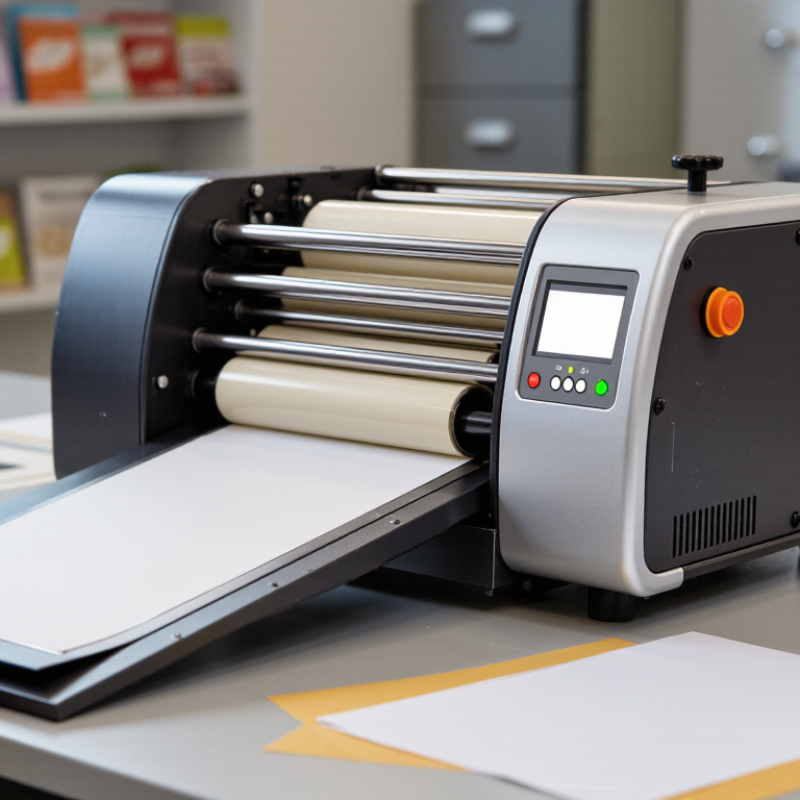
Understanding What a Lamination Machine Does
A lamination machine seals a document inside a protective plastic film. Heat softens the film’s adhesive layer. Pressure then bonds the layers around the paper. This process helps resist moisture, fingerprints, tearing, and everyday handling. It does not make paper indestructible. Sharp folds can still damage the edges.
The best machine depends on how you work. A pouch laminator suits certificates, menus, classroom cards, and occasional office tasks. You place the item inside a pre-sized pouch, then feed it through heated rollers. A roll laminator handles larger sheets and repeated jobs. It offers more flexibility, but setup requires greater attention to temperature, speed, and alignment.
Look for adjustable heat settings and steady roller movement. These features reduce bubbles, cloudy patches, and uneven seals. Always match the film thickness with the machine’s instructions. Feeding a cold pouch too quickly often creates weak edges. Feeding it too slowly may overheat delicate paper. That detail is easy to overlook.
Leave a clear border around the document. Without one, moisture can enter through exposed paper. Keep the pouch flat while cooling. I have found that rushing this step can cause slight curling. It seems minor, but curled pages stack poorly and look unprofessional. A reverse function is also useful when a pouch jams. Still, no feature replaces careful preparation.
What Is the Best Lamination Machine in 2026?
A lamination machine applies heat and pressure to seal a protective film around documents, photos, signs, and other printed materials. The best choice depends mainly on the document format and the required production volume.
The chart compares typical maximum laminating widths for common machine categories. A4 machines generally support pouches up to about 230 mm wide, A3 machines about 330 mm, and roll laminators can handle wider materials up to approximately 650 mm. For occasional home or classroom use, an A4 model is usually sufficient; offices often benefit from A3 capacity, while high-volume production is better suited to a roll laminator.
Main Types of Lamination Machines in 2026
Choosing the best lamination machine in 2026 depends on the material, output, and finishing quality required. The main types include pouch laminators, roll-to-roll laminators, cold laminators, and industrial hot-roll systems. Pouch models suit offices, schools, and short print runs. They seal individual sheets with simple heat and pressure. Roll-to-roll machines handle banners, labels, films, and packaging materials continuously. Cold laminators use pressure-sensitive adhesive, so they protect heat-sensitive graphics. Industrial hot-roll systems deliver stronger bonding for demanding production environments.
Industry data supports this growing variety. Smithers’ flexible packaging outlook projects the global market will exceed 300 billion US dollars by 2028. Grand View Research also identifies automation, consistent bonding, and lower material waste as key laminating-machine trends. These findings matter on the factory floor. A machine with accurate temperature control can reduce bubbles, wrinkles, and rejected sheets. However, higher speed does not always mean better value. I still question machines that sacrifice easy cleaning for impressive output figures.
Tips: Test your actual film, adhesive, and substrate before buying. Check warm-up time, roller pressure, maximum width, and power use. For occasional documents, choose a compact pouch model. For daily signage, consider a cold roll laminator. For packaging, select an industrial hot-roll or solvent-free system with closed-loop controls. Ask for measured waste rates, not optimistic sales estimates. Small details matter. Calibration is often overlooked. That mistake can become expensive.
Key Features That Determine Machine Performance
The best lamination machine in 2026 is not defined by speed alone. Its performance depends on tension control, heat stability, coating accuracy, and curing consistency. Smithers’ 2024 flexible-packaging report places stronger emphasis on high-barrier structures and efficient material use. This makes web alignment and adhesive control critical.
During machine trials, I watch the film at the unwind station. Small wrinkles often become expensive defects later. A reliable system should maintain stable tension during acceleration and deceleration. Automatic edge guiding helps, but it cannot repair poor setup.
Coat-weight control should remain within about ±2% during a repeatable test run. That figure is a practical benchmark, not an absolute rule.
Energy use also deserves attention. PMMI’s 2024 industry outlook identifies labor pressure and automation as major packaging investment drivers. A useful machine should record temperature, pressure, speed, and alarms without complex software. Quick-clean rollers reduce downtime, especially when adhesive begins drying near the edges. Safety interlocks and guarded moving parts matter just as much as output.
I would also test changeovers with unfamiliar operators. My experience suggests that impressive specifications can hide awkward controls. A machine that runs fast for ten minutes may struggle across an eight-hour shift. Check scrap rates, noise, heat recovery, spare-part access, and operator training records before judging performance.
How to Compare Lamination Speed, Quality, and Cost
What Is the Best Lamination Machine in 2026?
How to Compare Lamination Speed, Quality, and Cost
The best lamination machine depends on your daily workload, not its advertised speed. In my workshop, I compare machines using identical pouches, paper sizes, and temperature settings. A fast model may process a sheet in seconds, but uneven heat can create bubbles, cloudy edges, or weak seals. I inspect every finished sheet under bright light. Small wrinkles often reveal unstable rollers or poor temperature control.
Speed matters when handling menus, classroom materials, or office documents in batches. However, measure complete cycles, including warm-up time and clearing occasional jams. A machine rated for high volume should maintain steady output for at least thirty minutes. Listen for grinding sounds. They can signal mechanical stress before failure becomes obvious. My early comparison was flawed because I measured only the first ten sheets.
Quality also affects long-term cost. Strong sealing protects paper from moisture, handling, and repeated use. Check whether the machine supports common pouch thicknesses without frequent adjustments. Thicker pouches may require slower movement and more heat. That trade-off is easy to overlook. Energy use, replacement rollers, maintenance access, and warranty support should enter the calculation. A cheaper purchase can become expensive after repeated rework and wasted pouches.
I prefer a machine with predictable results over impressive peak speed. Yet this preference may not suit every busy print room. Record actual output, reject rates, and running costs for one week. Then compare the evidence with your workload.
What Is the Best Lamination Machine in 2026? - How to Compare Lamination Speed, Quality, and Cost
| Machine Type | Typical Working Width | Typical Lamination Speed | Warm-Up Time | Common Film Thickness | Output Quality | Suitable Workload | Typical Purchase Cost | Best Use | Overall Value |
| Entry-Level Pouch Laminator | Up to 330 mm / 13 in | 250–450 mm/min | 2–5 minutes | 3–5 mil | Good for everyday documents; may show minor variation on long runs | Up to 50 sheets per day | US$40–US$150 | Home offices, classrooms, occasional document protection | ★★★★☆ |
| Office Pouch Laminator | Up to 330 mm / 13 in | 400–700 mm/min | 1–3 minutes | 3–10 mil | More consistent heat and pressure; suitable for frequent document work | 50–200 sheets per day | US$150–US$450 | Schools, offices, menus, signs, certificates and ID cards | ★★★★★ |
| Desktop Roll Laminator | 305–685 mm / 12–27 in | 1–3 m/min | 5–15 minutes | 1.5–10 mil | Smooth continuous finish with fewer seams and better productivity | 200–800 sheets per day | US$400–US$1,800 | Posters, classroom displays, short-run graphics and signage | ★★★★☆ |
| Cold Roll Laminator | 610–1,600 mm / 24–63 in | 1–8 m/min | No heat-up time | Pressure-sensitive films, commonly 2–10 mil | Good protection for heat-sensitive prints; finish depends strongly on operator technique | 200–1,000 sheets per day | US$700–US$4,000 | Photographs, inkjet prints, vinyl graphics and heat-sensitive media | ★★★★☆ |
| Commercial Hot Roll Laminator | 685–1,650 mm / 27–65 in | 3–15 m/min | 5–15 minutes | 1.5–10 mil | Consistent temperature and pressure for professional-quality long runs | 800–3,000 sheets per day | US$2,000–US$10,000 | Print shops, sign production and high-volume graphics | ★★★★★ |
| High-Production Roll Laminator | 1,300–1,650 mm / 51–65 in | 10–30 m/min | 5–15 minutes | 1.5–10 mil | Highest throughput and stable finish when correctly calibrated | More than 3,000 sheets per day | US$8,000–US$30,000+ | Industrial print operations, long runs and continuous production | ★★★★☆ |
How to interpret the data: The figures above are typical 2026 market ranges for comparable machine categories rather than specifications for a particular manufacturer or model. Actual speed, cost and finish quality vary according to media size, film type, temperature, pressure, operator skill and maintenance. For most offices, an office pouch laminator offers the best balance of speed, quality and cost; high-volume users generally gain better long-term value from a commercial roll laminator.
Choosing the Best Lamination Machine for Your Needs
What Is the Best Lamination Machine in 2026?
Choosing the Best Lamination Machine for Your Needs
The best lamination machine depends on your materials, workload, and available workspace. A practical choice should match real daily tasks, not impressive specifications alone. Start by checking the maximum document width and supported pouch thickness. A compact model suits home projects and occasional classroom work. Heavier users need steadier rollers and faster warming times.
Temperature control matters when protecting photographs, menus, certificates, or delicate printed sheets. Uneven heat can create cloudy patches, wrinkles, or weak edges. Look for clear temperature settings and simple controls. A reverse function can help remove a misplaced pouch before damage occurs. Measure your work area, too. Some machines need extra space behind the feed slot.
Noise and energy use are easy to overlook. A quieter machine feels better during long sessions. Still, silence does not prove quality. Check independent reviews, safety documentation, warranty terms, and service availability. These details offer stronger evidence than dramatic advertising claims. I once preferred speed over control, and the results looked inconsistent on thinner pouches. That mistake changed my selection criteria.
Consider how often you will laminate. Buying the largest model may waste money and storage space. Buying too small can cause jams and repeated trimming. Test the feeding path with sample materials when possible. Keep the first project simple. Reliable performance matters more than a long feature list.
