top of page

7 Best Aluminum Scrap Melting Furnaces for Global Buyers

Choosing an aluminum scrap melting furnace is a practical decision for recyclers, foundries, and metal processors worldwide. The right furnace affects recovery rate, energy use, melt quality, labor safety, and production consistency. A shiny ingot may look simple, but its quality begins with scrap preparation and furnace control.

Mark E. Schlesinger, author of Aluminum Recycling, has emphasized, “The value of recycled aluminum depends on careful sorting, efficient melting, and controlled processing.” This principle remains useful when comparing furnace designs. Rotary furnaces can handle mixed and contaminated scrap. Reverberatory furnaces suit larger, continuous operations. Induction furnaces offer accurate temperature control and cleaner working conditions. Electric resistance furnaces may help smaller facilities manage installation requirements.

Small details matter. Wet scrap can cause dangerous metal reactions. Excessive oxidation can reduce yield. Poorly designed charging doors may slow production and increase heat loss. These problems are easy to underestimate. I have also seen buyers focus on furnace capacity while overlooking maintenance access, burner efficiency, and local technical support.

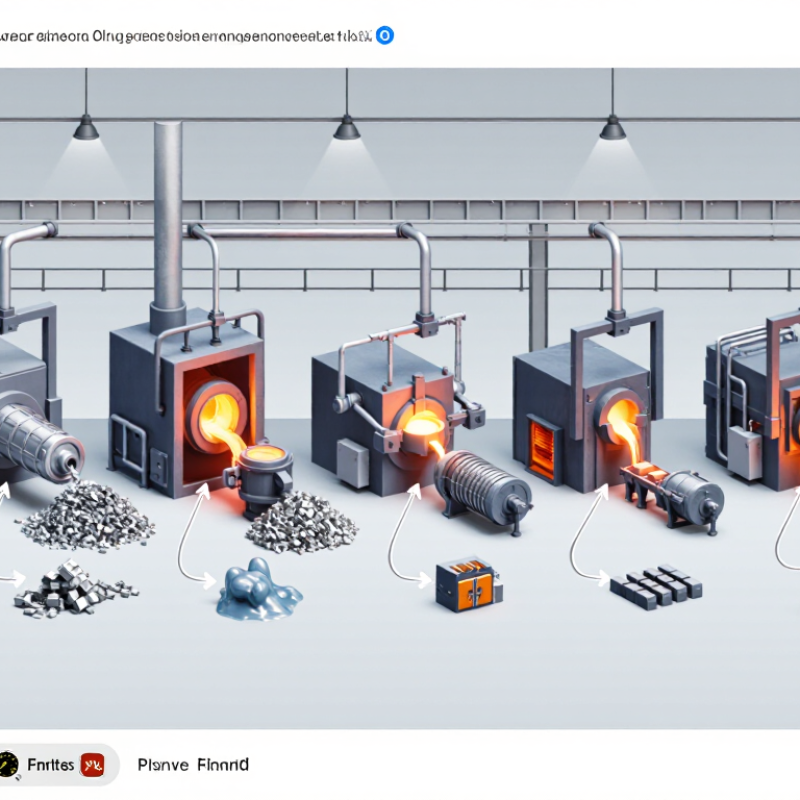
This guide reviews seven aluminum scrap melting furnace options for global buyers. Each model should be judged by its real operating environment, not by brochure claims alone. Consider scrap composition, daily throughput, fuel availability, emissions equipment, operator skills, and planned expansion. No furnace is perfect. A technically advanced system may still perform poorly without disciplined sorting and process monitoring. The comparison ahead aims to make that choice clearer, more realistic, and easier to verify.
7 Best Aluminum Scrap Melting Furnaces for Global Buyers

What Makes an Aluminum Scrap Melting Furnace Effective

An effective aluminum scrap melting furnace begins with predictable heat transfer. A well-insulated chamber reduces heat loss and shortens melting cycles. Electric resistance, gas, or induction heating can work well when matched to scrap volume and plant utilities. The right choice depends on energy cost, batch size, and local infrastructure.

Furnace design must also handle dirty, mixed scrap. A tilting body helps operators remove metal without excessive manual contact. A dry hearth limits moisture-related hazards and supports safer charging. Mechanical stirring or controlled circulation improves temperature uniformity. This matters when thin sheet, cast parts, and coated offcuts melt together. Reliable temperature sensors are essential. Operators should verify readings with calibrated instruments, because one failed probe can distort an entire batch.

Dross management separates a useful furnace from an expensive one. A suitable skimming system removes oxides while retaining more liquid aluminum. Sealed charging areas and effective exhaust equipment help control smoke and airborne contaminants. Maintenance access matters too. Refractory cracks, worn seals, and blocked burners rarely announce themselves early. In my practical experience, small defects often become large energy losses. No furnace is perfect. A design may perform well but still disappoint when scrap moisture, alloy variation, or operator training changes. Buyers should examine service records, spare-part access, documented safety controls, and measured fuel consumption before choosing among aluminum scrap melting furnaces.

Key Furnace Types for Processing Different Aluminum Scrap

Aluminum scrap rarely arrives in one clean, predictable form. Sorted extrusion and clean sheet usually perform well in reverberatory furnaces, which offer large bath capacity and steady melting. They suit recyclers processing several tonnes daily. However, oxidation losses can rise when operators overheat the surface or hold metal too long.

Induction furnaces provide rapid, controlled melting for clean, dense scrap and smaller batches. Their electromagnetic stirring improves temperature uniformity, but heavily painted or mixed scrap may create slag and unstable operation.

Crucible furnaces remain practical for small workshops and laboratory-scale production. They need less infrastructure, although manual charging can slow output.

Electric resistance furnaces work well for clean charge materials and holding molten aluminum, especially where quiet operation matters.

Rotary furnaces and tilting rotary furnaces handle oily turnings, coated pieces, and less uniform scrap more effectively. Their rotating action exposes the charge to heat, while tilting supports safer metal transfer.

A sidewell furnace can melt clean returns beside a holding chamber, reducing repeated handling. Stack or tower-style furnaces use vertical space and recover heat from exhaust gases, but installation and control can be demanding.

Moisture remains a serious concern. Even a small amount trapped in scrap can cause violent metal reactions.

In practical plant trials, the “best” furnace often changes after testing charge density, salt use, dross rate, energy consumption, and maintenance access.

My early comparisons also underestimated operator training. Equipment alone does not guarantee stable recovery.

Seven Leading Aluminum Scrap Melting Furnace Options Compared

Seven Leading Aluminum Scrap Melting Furnace Options Compared

Global buyers usually compare seven furnace types: gas-fired reverberatory, regenerative gas, electric resistance, induction, rotary, tilting, and compact crucible furnaces. Each handles scrap differently. Reverberatory designs suit large batches and steady production. Regenerative models can reduce fuel waste, but their controls are more demanding. Electric resistance furnaces offer clean operation and stable temperature control. They may increase electricity costs in some regions.

Induction furnaces melt quickly and provide strong temperature precision. However, they need reliable power and careful charge preparation. Rotary furnaces handle painted or mixed scrap well, though metal recovery depends on loading practice. Tilting furnaces improve pouring control and reduce manual handling. Compact crucible furnaces fit small workshops, but their capacity may limit future growth. I have seen buyers focus on melting speed first, then discover that maintenance access matters more.

Tips: Compare furnace capacity, energy source, lining life, exhaust treatment, and local service support. Ask for tested recovery data using your actual scrap mix. Check door seals and inspection points. Small details matter.

A practical purchase should also consider alloy separation, operator training, and batch frequency. Temperature records should be easy to review. Safety interlocks are essential. The cheapest furnace is not always economical. A missed maintenance cost can change the entire calculation. Some specifications look impressive on paper, yet real performance depends heavily on scrap moisture, contamination, and loading habits.

How to Evaluate Capacity, Energy Use, Safety, and Maintenance

7 Best Aluminum Scrap Melting Furnaces for Global Buyers

When comparing seven aluminum scrap melting furnaces, capacity should match your real batch size, not an optimistic sales figure. A furnace rated for 1,000 kilograms may perform poorly with wet, bulky scrap. Check melting time, charge density, holding capacity, and tapping speed. In my experience, reverberatory and rotary furnaces suit larger operations, while crucible, induction, and resistance furnaces often fit smaller batches. Tilting designs can improve pouring control, but they may require more floor space.

Energy use needs practical measurement. Ask for fuel or electricity consumption per ton of aluminum, based on actual scrap conditions. Record startup losses, door opening time, and holding temperature. A lower quoted figure is not always better. Insulation quality, burner adjustment, and operator habits can change results. Safety checks should include lid movement, emergency shutoff, ventilation, molten-metal containment, and moisture control. Even a small amount of trapped water can create a violent reaction.

Tips: Request a test melt with your own scrap. Inspect refractory wear after repeated cycles. Check whether heating elements, burners, thermocouples, and filters are locally available. Maintenance should be simple enough for trained technicians to complete safely. Keep service records. I would also leave space for future repairs; compact layouts often look efficient but become frustrating later. Mistakes happen. A careful inspection prevents expensive surprises.

7 Best Aluminum Scrap Melting Furnaces for Global Buyers - How to Evaluate Capacity, Energy Use, Safety, and Maintenance
Rank Furnace Type Typical Melting Capacity Typical Energy Use* Best Scrap Applications Temperature Control Safety Profile Maintenance Demand Main Advantages Key Limitations Recommended Buyer Profile
1 Regenerative Gas-Fired Reverberatory Furnace 5–20 tonnes/hour
30–100 tonnes/day
650–900 kWh equivalent/tonne of molten aluminum High-volume, pre-sorted aluminum scrap, sheet, extrusion, and castings Good; automated burner and bath-temperature control are commonly available High
Requires combustion-gas monitoring, burner interlocks, ventilation, and molten-metal spill protection
Medium
Burners, refractory lining, doors, seals, and recuperation equipment require scheduled inspection
High throughput, lower fuel consumption than conventional gas systems, suitable for continuous production Large footprint; metal oxidation and dross formation can increase with excessive turbulence or long holding times Large secondary aluminum plants and continuous foundry operations
2 Electric Induction Furnace 0.5–10 tonnes/hour 600–800 kWh/tonne of molten aluminum Clean, dense scrap, remelt ingot, runners, returns, and controlled alloy batches Very good; rapid power adjustment and accurate bath monitoring are possible High
Requires water-cooling protection, electrical interlocks, grounding, and strict moisture control
Medium
Coil, refractory lining, cooling system, and power electronics need regular checks
Fast melting, precise control, no direct combustion emissions at the furnace, and flexible batch operation Unsuitable for heavily contaminated or highly oxidized scrap without suitable pretreatment; electricity supply must be reliable Medium-sized foundries, alloy producers, and facilities requiring frequent alloy changes
3 Gas-Fired Rotary Furnace 1–10 tonnes/batch
1–5 batches/hour
700–1,000 kWh equivalent/tonne of molten aluminum Mixed, thin, coated, oily, or contaminated scrap with a high surface-area-to-weight ratio Good; controlled rotation and burner adjustment support uniform heating Medium–High
Requires robust charging procedures, gas safety systems, fume extraction, and splash protection
Medium–High
Rotary seals, refractory lining, drive components, and burner systems experience substantial wear
Handles difficult scrap, improves metal recovery compared with simple open melting, and supports flexible batch sizes Higher refractory and mechanical wear; dross and oxide management remain important Recycling plants processing variable-quality or contaminated aluminum scrap
4 Electric Resistance Crucible Furnace 50–1,000 kg/batch 700–1,000 kWh/tonne of molten aluminum Clean returns, ingot, small castings, and low-to-medium volume production Good; digital controllers can maintain stable holding and melting temperatures High
Lower combustion exposure, but operators still need protection from molten metal and electrical hazards
Low–Medium
Heating elements, thermocouples, crucible condition, and insulation require routine inspection
Simple operation, clean working environment, compact installation, and relatively low initial complexity Limited batch size and slower melting for large scrap pieces or high-throughput applications Small foundries, laboratories, maintenance shops, and low-volume casting operations
5 Gas-Fired Crucible Furnace 50–1,500 kg/batch 900–1,200 kWh equivalent/tonne of molten aluminum Clean ingot, returns, and small quantities of sorted scrap Moderate; temperature stability depends on burner control and operator practice Medium
Needs flame-failure protection, gas-leak detection, ventilation, and safe crucible handling
Low–Medium
Crucible, burner, refractory, thermocouple, and gas train need periodic service
Low purchase cost, straightforward installation, and useful where electricity capacity is limited Higher fuel consumption and heat loss; less suitable for dirty scrap or continuous high-volume production Small and medium foundries in regions with accessible, economical gas supplies
6 Tower or Shaft Melting Furnace 2–15 tonnes/hour 550–750 kWh equivalent/tonne of molten aluminum Consistent, compacted, and pre-sorted scrap with stable feed composition Good; controlled charging and melting zones provide stable operation Medium–High
Requires controlled charging, dust and fume extraction, interlocks, and reliable feed equipment
Medium–High
Charging mechanisms, refractory zones, burners, and filters need planned maintenance
High thermal efficiency, compact footprint for its output, and low energy use with suitable feedstock Performance drops with wet, bulky, highly contaminated, or irregularly sized scrap; pretreatment is often essential Large recycling operations with reliable scrap sorting and compacting systems
7 Electric Sidewell or Holding Furnace with Charging Well 1–8 tonnes/hour
5–30 tonnes holding capacity
600–850 kWh/tonne of molten aluminum Continuous casting, die casting, and operations using preheated or prepared scrap and returns Very good; separate melting, holding, and transfer zones help stabilize alloy temperature High
Requires level controls, electrical protection, dry charging, and safe molten-metal transfer procedures
Medium
Pumps, refractory, heating elements, thermocouples, and transfer channels require inspection
Stable metal delivery, low temperature variation, reduced holding losses, and good compatibility with automated lines Higher installation complexity; generally needs prepared feedstock and integration with downstream equipment Automated casting lines and plants requiring continuous, tightly controlled molten aluminum supply

*Energy figures are typical engineering ranges for melting aluminum to approximately 700–760°C under suitable operating conditions. Actual consumption varies with scrap cleanliness, moisture, charge density, furnace size, insulation, burner or power-system efficiency, holding time, and local fuel or electricity conditions. All aluminum scrap should be dry, properly sorted, and free from sealed containers before charging.

Essential Buying Factors for Global Aluminum Scrap Buyers

7 Best Aluminum Scrap Melting Furnaces for Global Buyers

Global buyers should evaluate furnaces against scrap quality, power supply, and production rhythm. Aluminum scrap often carries paint, oil, moisture, and mixed alloys. These contaminants affect melt loss, dross formation, and worker safety. The International Aluminium Institute reports that recycling aluminum uses about 5% of the energy required for primary production. That advantage disappears when a furnace has poor insulation, unstable temperature control, or excessive holding time.

Capacity should match the real batch size, not the supplier’s maximum figure. Compare melting rate, fuel consumption, refractory life, and recovery percentage under similar scrap conditions. Gas-fired, electric resistance, induction, and rotary designs each suit different operating environments. Electric systems may fit regions with reliable low-carbon power. Fuel-fired systems may offer simpler installation where electricity is expensive. Ask for measured data, not attractive estimates. The U.S. Department of Energy identifies process heating as a major industrial energy-use area, so small efficiency losses can become large annual costs.

Check loading access, fume extraction, slag removal, spare-part availability, and local technical support. A furnace should also provide accurate thermocouples and simple controls. Over-automation can create repair delays in remote plants. No furnace is perfect. Buyers should request references from facilities processing similar scrap, then inspect maintenance records and actual fuel or electricity bills. The best choice is rarely the largest model; it is the one that remains stable during dirty, uneven, and changing scrap loads.

Concrete Products Unlimited

Mon-Fri 8AM - 5PM

Concrete products, wholesale Arizona river rock for landscaping, decorative rock, sand and gravel. Rock quarry located in Arizona and delivers throughout the USA.

©2003 by Concrete Products Unlimited

bottom of page