top of page

2026 Best Agricultural Machinery Parts Suppliers?

Choosing dependable Agricultural Machinery Parts suppliers in 2026 requires more than comparing prices. Farmers and repair workshops need components that perform under dust, vibration, moisture, and long working hours. A low-cost bearing may appear attractive, yet early failure can stop harvesting during a critical weather window.

This guide examines suppliers through practical and technical criteria. It considers product range, material quality, dimensional accuracy, equipment compatibility, and documented testing. It also reviews seals, hydraulic components, belts, filters, cutting parts, and tractor replacement parts. Supplier experience matters, especially when a company supports older machines with limited documentation. Clear product numbers and accurate fitment data can prevent costly ordering mistakes. So can responsive technical support.

Field evidence remains important. A supplier may publish impressive specifications, but real maintenance records reveal more. We will look for warranty policies, batch traceability, delivery consistency, and customer feedback from agricultural users. Independent certifications can strengthen confidence, but they should not replace careful verification. Standards are useful. They are not magic.

No supplier is perfect. Some offer excellent precision but limited inventory. Others deliver quickly while providing weaker technical guidance. This comparison acknowledges those trade-offs instead of promising a universal winner. Information may also change during 2026, including prices, stock levels, and regional service coverage. Readers should confirm critical details before purchasing. By combining workshop experience, engineering judgment, and reliable documentation, this guide aims to identify suppliers that support safer repairs, predictable uptime, and better long-term machinery value.
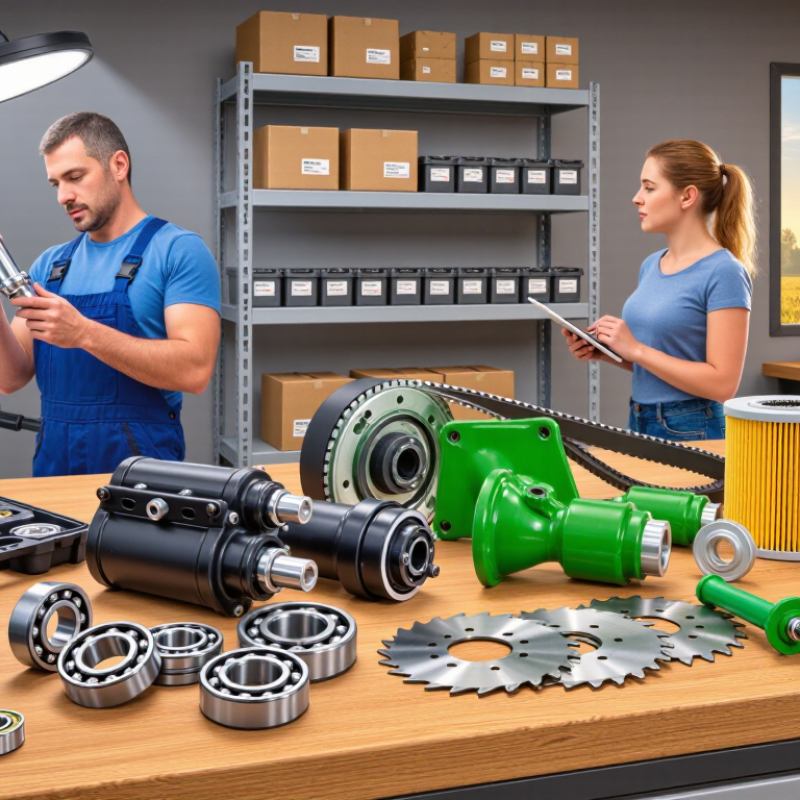
2026 Best Agricultural Machinery Parts Suppliers?

What Agricultural Machinery Parts Suppliers Do in 2026

In 2026, agricultural machinery parts suppliers do more than sell replacement components. They help farms keep critical equipment working during narrow planting and harvest windows. Their teams match part dimensions, materials, tolerances, and machine records before shipping. They may review photos, service histories, and operating conditions with a technician. That practical conversation matters. A bearing used in dusty soil needs different attention from one used in a clean workshop. Suppliers also maintain traceable quality records, inspection reports, and clear installation guidance.

Reliable suppliers now combine stocked inventory with demand forecasting and regional distribution. Sensors and maintenance software can reveal recurring failures, but data does not replace field judgment. Experienced staff still ask about load, soil moisture, vibration, and repair history. They test critical parts for fit and performance before wider release. Some provide training videos, torque specifications, and safety reminders for mechanics. These services reduce avoidable downtime, although rushed orders can still create errors.

The strongest suppliers listen after delivery. They record mechanic feedback, investigate premature wear, and adjust designs or packaging when evidence supports it. They also explain material origins, warranty limits, and expected service life without hiding uncertainty. Not every forecast is right. A supplier may overstock one component and miss another during an unusual season. That weakness deserves review, not excuses. In 2026, dependable agricultural parts supply depends on transparent records, responsive support, and decisions grounded in real field conditions.

How to Evaluate Agricultural Machinery Parts Suppliers

Choosing agricultural machinery parts suppliers requires more than comparing prices. Start by matching the supplier to your machine’s working conditions. Ask for exact dimensions, material grade, tolerance range, and compatibility records. A gearbox bearing may look correct but fail during a dusty harvest if its seal is weak. Request drawings or samples before placing a large order. This step prevents costly downtime and difficult returns.

Evaluate quality through evidence, not polished promises. Reliable suppliers can explain heat treatment, surface hardness, inspection tools, and batch traceability. Ask for inspection reports and replacement terms in writing. Check whether their warehouse protects rubber seals from heat and moisture. Delivery performance also matters. A cheaper part arriving three weeks late may cost more overall. I would test a small batch under real field conditions. Laboratory data helps, but soil, vibration, and rushed maintenance reveal different weaknesses. No supplier is perfect. A supplier admitting limitations may deserve more trust than one claiming zero failures.

Tips: Compare at least three quotations, but review specifications line by line. Confirm lead times, packaging, warranty coverage, and technical support. Keep photos of worn parts and record operating hours. These details help technicians diagnose problems instead of guessing. Visit the facility when possible, and speak with technicians, not only sales staff. Ask one uncomfortable question: “What commonly fails in this part?” The answer may reveal practical knowledge—or its absence.

Key Parts Categories and Equipment Compatibility

Choosing a dependable agricultural machinery parts supplier in 2026 requires more than comparing prices. The strongest suppliers organize parts by function and equipment compatibility. Common categories include engine filters, belts, bearings, hydraulic seals, electrical components, cutting edges, and PTO parts. Each category faces different stresses in the field. A hydraulic seal may survive pressure but fail under heat or contaminated oil. Small errors matter.

Compatibility should be checked through the machine model, production year, serial range, and original part dimensions. For hydraulic components, confirm pressure rating, port size, seal material, and flow direction. Electrical parts need matching voltage, connector layout, and protection rating. PTO shafts require correct length, spline profile, guarding, and rotational speed. Measure twice. A supplier that provides technical drawings, load data, installation notes, and traceable test records shows stronger professional practice. Clear return rules also protect buyers when an old machine has undocumented modifications.

From field maintenance experience, wear parts deserve special attention because dust, soil, and vibration expose weak materials quickly. Ask whether a bearing uses the correct clearance or whether a belt tolerates the expected temperature range. Do not trust a photograph alone. I have seen nearly identical filters differ in bypass pressure and fitment. That mistake can stop a tractor during planting. No catalog is perfect, so suppliers should welcome measurements, service history, and direct questions before dispatch. Reliable support sounds less impressive than marketing, but it prevents expensive downtime.

This chart compares common agricultural machinery replacement-part categories by the number of major equipment groups they typically support: tractors, combines, planters, sprayers, and forage or harvesting equipment. Compatibility should always be confirmed using the machine model, part specifications, dimensions, and operating requirements.

Leading Supplier Selection Criteria for Farmers and Dealers

Choosing an agricultural machinery parts supplier in 2026 starts with fit, not a low quoted price. Farmers and dealers should compare part numbers, dimensions, material grades, and machine serial ranges. A coupling that looks identical may alter vibration, fuel use, or downtime. Ask for drawings, tolerance data, and installation guidance before placing a large order. Good suppliers answer technical questions without hiding behind sales language. That matters during harvest.

Reliability shows in evidence. Request batch traceability, inspection records, warranty terms, and a clear process for defective parts. Suppliers should explain how they test bearings, hydraulic seals, cutting edges, or electrical components. Delivery performance also needs measurement: promised dates, packaging quality, stock visibility, and emergency response. Speak with working dealers or repair technicians, not only listed references. Their workshop notes may reveal recurring fit problems. Small details count.

Cost deserves a wider calculation. Compare service life, return freight, labor hours, and the price of a failed repair. A cheap belt is not cheap after three replacements in one season. I have seen buyers overvalue polished catalogs and undervalue local technical support. That was a mistake. Still, no checklist is perfect; field conditions, operator habits, and storage can change results. Start with a trial order, record installation hours, and inspect the part after real use. Keep the findings, even when they challenge the supplier’s claims.

2026 Best Agricultural Machinery Parts Suppliers? - Leading Supplier Selection Criteria for Farmers and Dealers

Selection Dimension Recommended 2026 Benchmark Why It Matters to Farmers and Dealers Evidence to Request Suggested Evaluation Weight
Parts Compatibility Verified compatibility with the exact machine model, serial range, engine type, and component specification. Correct fit reduces installation time, premature failure, and equipment downtime during critical planting and harvest periods. Technical drawings, dimensional charts, cross-reference lists, and application records. 20%
Material and Manufacturing Quality Documented material grades, controlled heat treatment where applicable, and repeatable production processes. Wear parts, bearings, seals, and hydraulic components must withstand vibration, dust, loads, and seasonal operating stress. Material certificates, inspection reports, process-control records, and sample test results. 18%
Quality Management System A documented quality system, preferably certified to ISO 9001 or supported by equivalent auditable controls. Consistent inspection, traceability, corrective action, and change control are essential for repeat orders. Current certificate, certification scope, audit date, inspection plan, and nonconformance procedure. 12%
Availability and Lead Time Clear stock status and production schedules; fast-moving maintenance parts should be available for urgent dispatch. Shorter replenishment cycles help dealers prevent stockouts and help farms return machinery to service quickly. Inventory reports, historical delivery records, standard lead-time tables, and seasonal capacity plans. 15%
Order Accuracy and Traceability Every shipment should be traceable by part number, revision, batch or lot where applicable, and purchase order. Accurate identification minimizes wrong-part deliveries, returns, warranty disputes, and installation errors. Barcoding or labeling procedure, packing-list format, batch records, and sample order documentation. 8%
Warranty and Technical Support Written warranty terms, defined claim procedures, installation guidance, and access to qualified technical staff. Responsive support reduces troubleshooting time and clarifies responsibility when a part fails in operation. Warranty policy, response-time commitment, service manuals, failure-analysis process, and claim examples. 10%
Total Cost of Ownership Compare purchase price together with service life, failure risk, installation labor, freight, duties, and return costs. The lowest unit price may create higher operating costs if replacement intervals are short or failure causes downtime. Full quotations, expected service-life data, freight terms, payment terms, and return-cost assumptions. 10%
Supply Chain and Compliance Transparent production locations, responsible sourcing controls, export documentation, and applicable product compliance records. Reliable documentation and supply visibility reduce customs delays, procurement risk, and regulatory exposure. Origin documents, export paperwork, compliance declarations, supplier code of conduct, and contingency plans. 5%
Total Evaluation Weight 100%
Recommended purchasing approach: Validate technical compatibility first, compare total cost of ownership second, and approve a supplier only after sample inspection, delivery verification, and warranty review.

Trends Shaping the Agricultural Machinery Parts Market in 2026

2026 Best Agricultural Machinery Parts Suppliers?

The agricultural machinery parts market is shifting from low-price replacement to measurable uptime. The OECD-FAO Agricultural Outlook 2024-2033 expects global agricultural and fish production to grow about 1.1% annually. Much of this growth depends on higher productivity, not unlimited land expansion. That pressure will favor suppliers offering durable, compatible, and quickly available parts.

Predictive maintenance is becoming a major purchasing factor. Sensors, telematics, and digital service records can identify abnormal vibration, heat, or hydraulic pressure before field failure. The International Data Corporation reports that global data creation continues to expand rapidly, supporting more connected equipment and smarter maintenance systems. Electrification will also influence bearings, cooling systems, connectors, and power-control components. However, forecasts are not promises. Dust, water, poor installation, and weak local service can still defeat advanced technology.

Tips: Ask suppliers for tested compatibility, material specifications, warranty terms, and delivery records. Check whether critical parts remain available during planting and harvest seasons. Request evidence from recognized testing laboratories or documented field trials. Remanufactured components can reduce cost, but inspect tolerances and traceability carefully. A cheaper seal is not cheaper after one preventable breakdown. In my view, the best supplier is not always the largest; it is the one that combines verified quality, accurate technical support, and dependable regional inventory. Mistakes still happen, so review failure data instead of trusting sales claims alone.

Concrete Products Unlimited

Mon-Fri 8AM - 5PM

Concrete products, wholesale Arizona river rock for landscaping, decorative rock, sand and gravel. Rock quarry located in Arizona and delivers throughout the USA.

©2003 by Concrete Products Unlimited

bottom of page